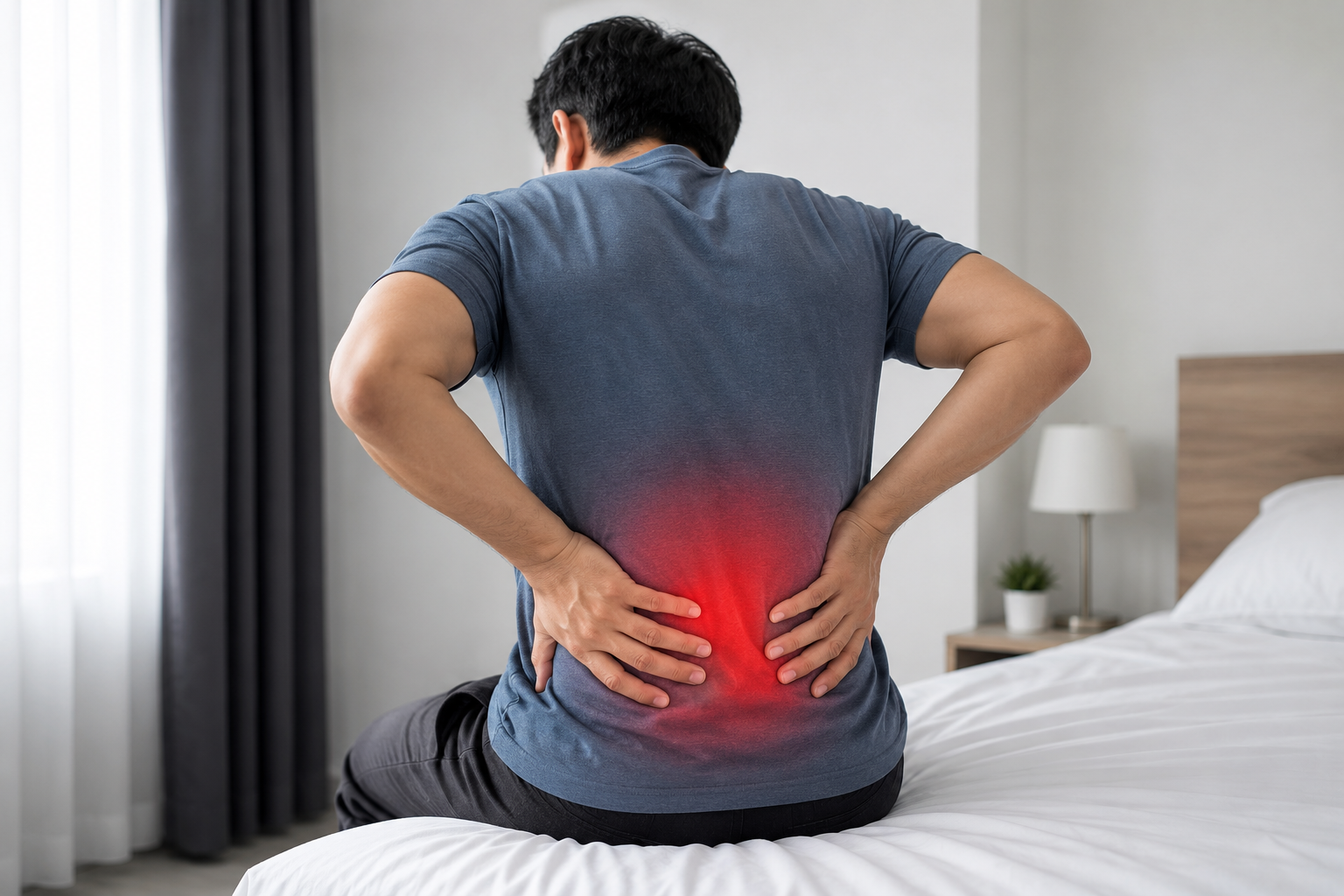
Back pain is a common health problem that can affect people of all ages. It may happen after sitting for long hours, lifting something heavy, exercising, or even due to poor posture. In many cases, back pain improves with rest and simple care. However, sometimes it can be a sign of an underlying condition that needs medical attention.
Common Causes of Back Pain
1. Poor Posture
Sitting or standing with poor posture for long periods can put extra pressure on the muscles and spine. People who work for many hours at a desk may experience back and neck pain because of incorrect sitting positions.
2. Muscle Strain
Lifting heavy objects, sudden movements, or doing strenuous physical activities can strain the muscles and ligaments in the back. This may cause pain, stiffness, and difficulty moving comfortably.
3. Slipped or Herniated Disc
The spine contains soft discs that act as cushions between the bones. Sometimes, a disc can bulge or move out of its normal position and put pressure on nearby nerves. This may cause back pain that can sometimes spread to the legs.
4. Arthritis
Arthritis can affect the joints and structures of the spine. As people get older, changes in the spine may cause stiffness, discomfort, and reduced movement.
5. Sciatica
Sciatica occurs when the sciatic nerve becomes irritated or compressed. It can cause pain that starts in the lower back and travels through the hip, buttock, and leg.
6. Lack of Physical Activity
A sedentary lifestyle can weaken the muscles that support the spine. Weak back and abdominal muscles may make it harder for the body to maintain good posture and support the spine properly.
When Should You See an Orthopaedic Doctor?
Not every episode of back pain requires immediate medical attention. However, you should consider consulting an orthopaedic doctor if the pain:
- Continues for several days or keeps returning
- Becomes severe or affects daily activities
- Travels from the back into the leg
- Causes numbness, tingling, or weakness
- Develops after an accident or injury
- Is associated with difficulty walking or moving
- Does not improve with rest and basic care
An orthopaedic doctor can evaluate your symptoms, medical history, and physical condition. Depending on the situation, the doctor may recommend diagnostic tests such as an X-ray, MRI, or other investigations to identify the possible cause of the pain.
How Can Back Pain Be Prevented?
Simple lifestyle habits can help reduce the risk of back pain. Maintain good posture while sitting and standing, exercise regularly, avoid lifting heavy objects incorrectly, maintain a healthy body weight, and take regular breaks if you sit for long periods.