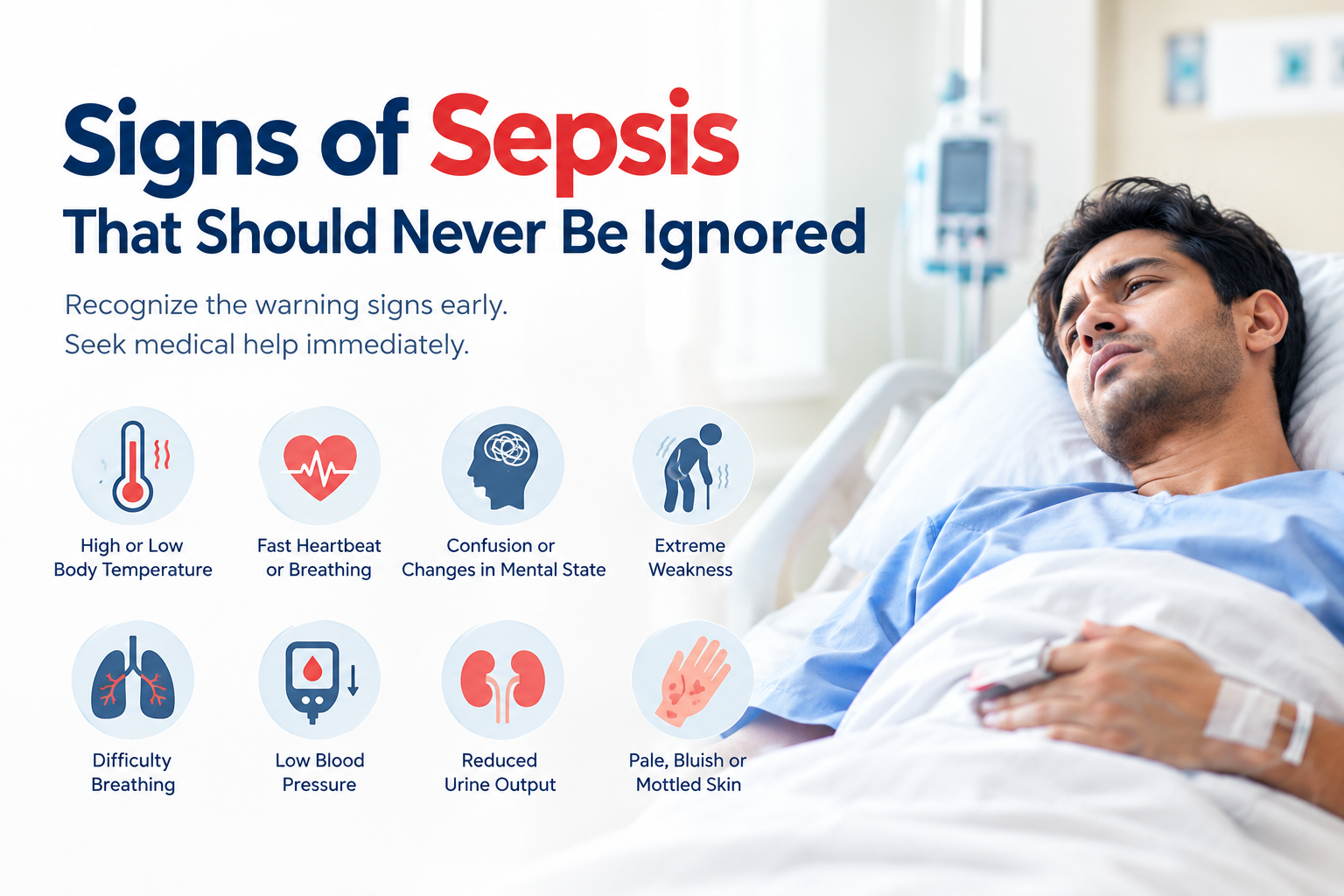
Sepsis is a life-threatening medical condition that can occur when the body's response to an infection becomes extreme and starts damaging tissues and organs. It can develop from infections in different parts of the body, including the lungs, urinary tract, abdomen, or skin. Early recognition of sepsis symptoms and immediate medical attention are extremely important.
What Is Sepsis?
Sepsis occurs when the body's immune system reacts strongly to an infection. Instead of only fighting the infection, this response can cause inflammation throughout the body and affect important organs. Without early sepsis treatment, the condition can become severe and may lead to organ failure.
Sepsis can affect anyone, but the risk may be higher in older adults, newborns, people with weakened immune systems, and people with certain long-term health conditions.
Signs of Sepsis You Should Never Ignore
Knowing the warning signs of sepsis can help you seek medical care quickly. Some important symptoms include:
1. High or Low Body Temperature
A high fever can occur with an infection, but some people with sepsis may have an unusually low body temperature. Chills or feeling extremely cold can also occur.
2. Fast Heartbeat or Breathing
A rapid heart rate or breathing much faster than usual can be an important warning sign. The body may increase heart and breathing rates while trying to respond to an infection.
3. Confusion or Changes in Mental State
Sudden confusion, disorientation, unusual sleepiness, or difficulty staying awake should never be ignored, especially when accompanied by an infection or fever.
4. Extreme Weakness
Sepsis may cause severe weakness or unusual tiredness. A person may suddenly find it difficult to stand, walk, or perform normal activities.
5. Difficulty Breathing
Shortness of breath or rapid breathing can be a serious warning sign. Breathing difficulties require prompt medical assessment.
6. Low Blood Pressure
Severe sepsis can cause low blood pressure, which may result in dizziness, fainting, weakness, or a feeling that something is seriously wrong.
7. Reduced Urine Output
Producing much less urine than usual can indicate that the kidneys are being affected. Reduced urine output should receive urgent medical attention when associated with an infection.
8. Pale, Bluish, or Mottled Skin
Changes in skin colour, including pale, bluish, or mottled skin, can occur when blood circulation is affected.
When Should You Seek Medical Help?
Sepsis can progress quickly, so do not wait for all symptoms to appear. If someone has an infection and develops confusion, breathing difficulty, very fast heart rate, extreme weakness, low blood pressure, or other serious symptoms, seek emergency medical care immediately.
Early diagnosis and timely sepsis treatment can be critical. Doctors may perform examinations and tests to identify the infection and assess how the body's organs are functioning. Treatment may include antibiotics, fluids, oxygen, and other supportive care depending on the patient's condition.
Take Sepsis Symptoms Seriously
Recognizing the early signs of sepsis can make an important difference. Sepsis is a medical emergency and requires immediate professional evaluation. If you suspect that you or someone around you may have sepsis, seek emergency medical care without delay.
This article is for general awareness and does not replace professional medical advice or emergency care.