
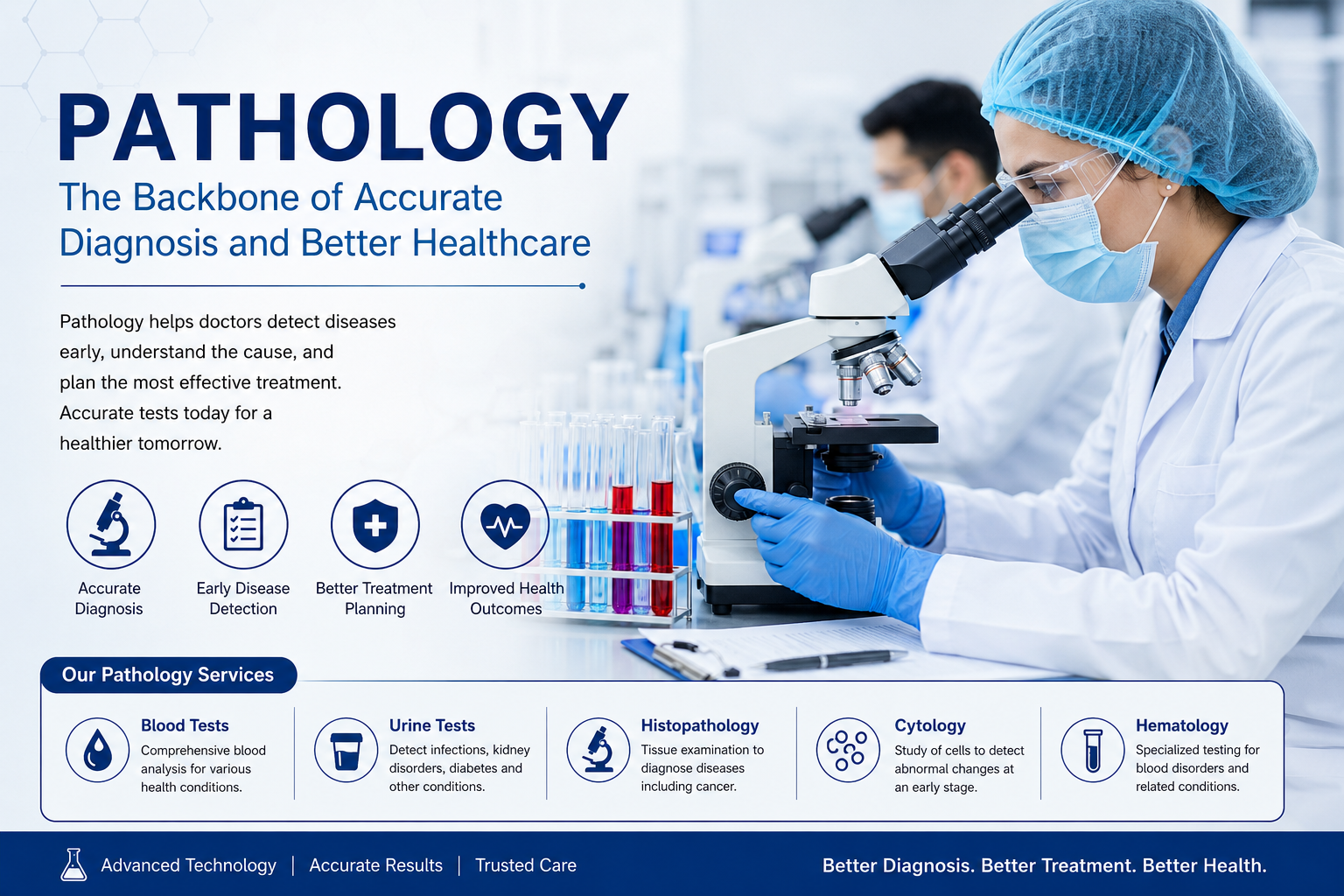
Modern healthcare depends on accurate diagnosis, and pathology is one of the most important medical specialties that makes this possible. Every day, doctors rely on pathology reports to understand diseases, confirm diagnoses, monitor treatments, and guide patient care.
Whether it is a routine blood test, tissue biopsy, urine analysis, or advanced laboratory investigation, pathology helps detect diseases at an early stage and supports effective medical decision-making. With modern equipment and experienced specialists, pathology services have become an essential part of quality healthcare.
Pathology is the branch of medical science that studies diseases by examining blood, body fluids, tissues, and cells. Pathologists work closely with physicians and surgeons to identify the exact cause of illnesses and provide accurate laboratory reports.
A pathology laboratory helps diagnose various medical conditions, including:
Accurate pathology reports help doctors create personalized treatment plans and monitor patient recovery.
Many diseases cannot be diagnosed based on symptoms alone. Laboratory investigations provide scientific evidence that helps doctors make informed clinical decisions.
The benefits of pathology include:
Timely pathology testing often leads to quicker treatment and better health outcomes.
A modern pathology laboratory performs a wide range of investigations to evaluate overall health.
Blood tests are among the most commonly requested investigations.
These include:
These tests help identify infections, diabetes, anemia, organ function, and many other health conditions.
Urine tests help detect:
They are simple, quick, and provide valuable information about overall health.
Histopathology involves examining tissue samples under a microscope to identify abnormal changes.
It is commonly used for:
Histopathology plays a crucial role in confirming many serious medical conditions.
Cytology studies individual cells to detect abnormal or cancerous changes.
Common cytology tests include:
These investigations help detect diseases at an early stage.
Hematology focuses on diseases related to blood and blood-forming organs.
It helps diagnose:
Accurate hematology testing is essential for many medical treatments.
Regular laboratory testing helps identify health problems before symptoms become severe.
Advantages include:
Preventive testing is especially important for people with diabetes, hypertension, heart disease, or a family history of chronic illnesses.
Today's pathology laboratories use modern technology to deliver highly accurate and timely reports.
Advanced laboratory equipment offers:
Technology has significantly improved the speed and precision of laboratory diagnostics.
To ensure accurate results, patients should follow their doctor's instructions carefully.
Some tests may require:
Proper preparation helps improve the reliability of laboratory investigations.
A hospital with a well-equipped pathology department offers several advantages:
Having diagnostic services available within the hospital also ensures faster treatment decisions and greater convenience for patients.
Pathology is the foundation of modern healthcare, providing the accurate diagnostic information that doctors need to deliver effective treatment. From routine health screenings to specialized investigations, pathology services help detect diseases early, monitor medical conditions, and improve patient outcomes.
Choosing a hospital with experienced pathologists, advanced laboratory facilities, and a commitment to quality ensures reliable diagnostic services and comprehensive patient care. Accurate pathology testing is not just about identifying diseases—it is the first step toward better health and a healthier future.
 Why Choosing an Expert Doctor Makes All the Difference in Your Healthcare Journey
Pathology: The Backbone of Accurate Diagnosis and Better Healthcare
Why Choosing an Expert Doctor Makes All the Difference in Your Healthcare Journey
Pathology: The Backbone of Accurate Diagnosis and Better Healthcare
 The Importance of Accurate Diagnosis: The First Step Toward Effective Treatment
 Understanding Anesthesia: Ensuring Safe, Comfortable, and Pain-Free Surgery
 National Doctor's Day: Honoring the Heroes Who Care for Our Health
© Delhi Hospital All Right Reserved 2025