
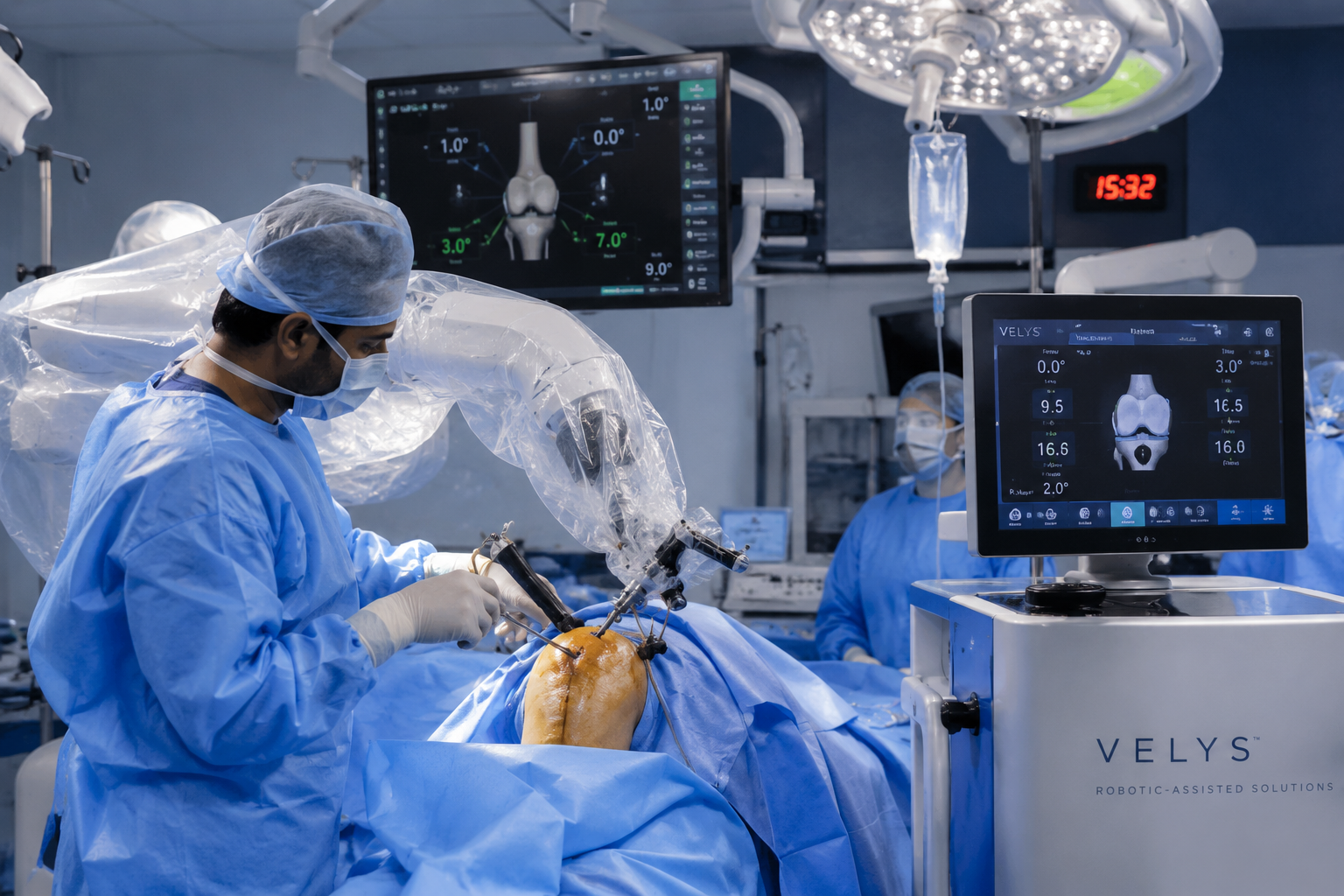
Knee pain, stiffness, and difficulty walking can significantly impact your daily life. Whether caused by arthritis, injury, or age-related wear and tear, chronic joint pain can make simple activities feel challenging. Thankfully, medical technology has evolved, and Robotic Joint Replacement Surgery is now helping patients regain mobility with greater precision and faster recovery.
Robotic knee replacement surgery is an advanced orthopedic procedure that uses robotic technology to assist surgeons in replacing damaged joints with improved accuracy. Contrary to common belief, the surgery is not performed by a robot alone — the surgeon remains fully in control while robotic assistance helps improve precision and planning.
Robotic Joint Replacement Surgery is a modern technique used to replace damaged knee or hip joints. Before surgery, detailed imaging and advanced computer-assisted planning help create a personalized surgical approach tailored to the patient’s anatomy. During the procedure, robotic assistance guides the surgeon to place implants with exceptional accuracy and alignment.
This precision helps improve joint function, movement, and long-term implant performance compared to conventional methods. Robotic systems allow surgeons to customize the surgery based on each patient's unique joint structure.
One of the biggest advantages of robotic-assisted surgery is precision. Robotic technology helps surgeons make highly accurate bone cuts and implant positioning, improving alignment and reducing errors. Better alignment can contribute to improved joint performance and implant longevity.
Because robotic surgery is often minimally invasive, there is less tissue damage and muscle disruption. Patients may experience quicker healing and an earlier return to daily activities.
Smaller incisions and precise surgical movements often result in reduced blood loss and less post-operative discomfort compared to traditional knee replacement surgery.
Robotic systems create a detailed 3D model of the patient’s knee, enabling surgeons to design a treatment plan based on individual anatomy. This personalized approach improves implant positioning and balance.
Many patients undergoing robotic knee replacement experience shorter hospitalization and faster rehabilitation, depending on overall health and recovery progress.
You may be a suitable candidate for robotic knee replacement if you experience:
A detailed orthopedic evaluation helps determine whether robotic joint replacement is the right option for you. Experts note that robotic surgery may not be ideal for every patient and should be chosen based on medical condition and specialist advice.
Recovery varies from patient to patient, but robotic knee replacement surgery often allows earlier movement and rehabilitation. Physiotherapy plays a major role in restoring flexibility, muscle strength, and mobility. Following your doctor’s recovery plan is essential for achieving the best results.
At Delhi Hospital, we are committed to providing advanced orthopedic care with modern medical technology and experienced specialists. Our focus is on precision treatment, patient safety, faster recovery, and personalized care to help patients return to an active, pain-free life.
Robotic Joint Replacement Surgery has transformed orthopedic treatment by offering greater precision, improved implant alignment, less pain, and faster recovery. If chronic knee pain is affecting your quality of life, robotic knee replacement may help restore movement and confidence.
Take the first step toward pain-free mobility with expert orthopedic care at Delhi Hospital.
 Why Choosing an Expert Doctor Makes All the Difference in Your Healthcare Journey
 Pathology: The Backbone of Accurate Diagnosis and Better Healthcare
 The Importance of Accurate Diagnosis: The First Step Toward Effective Treatment
 Understanding Anesthesia: Ensuring Safe, Comfortable, and Pain-Free Surgery
 National Doctor's Day: Honoring the Heroes Who Care for Our Health
© Delhi Hospital All Right Reserved 2025