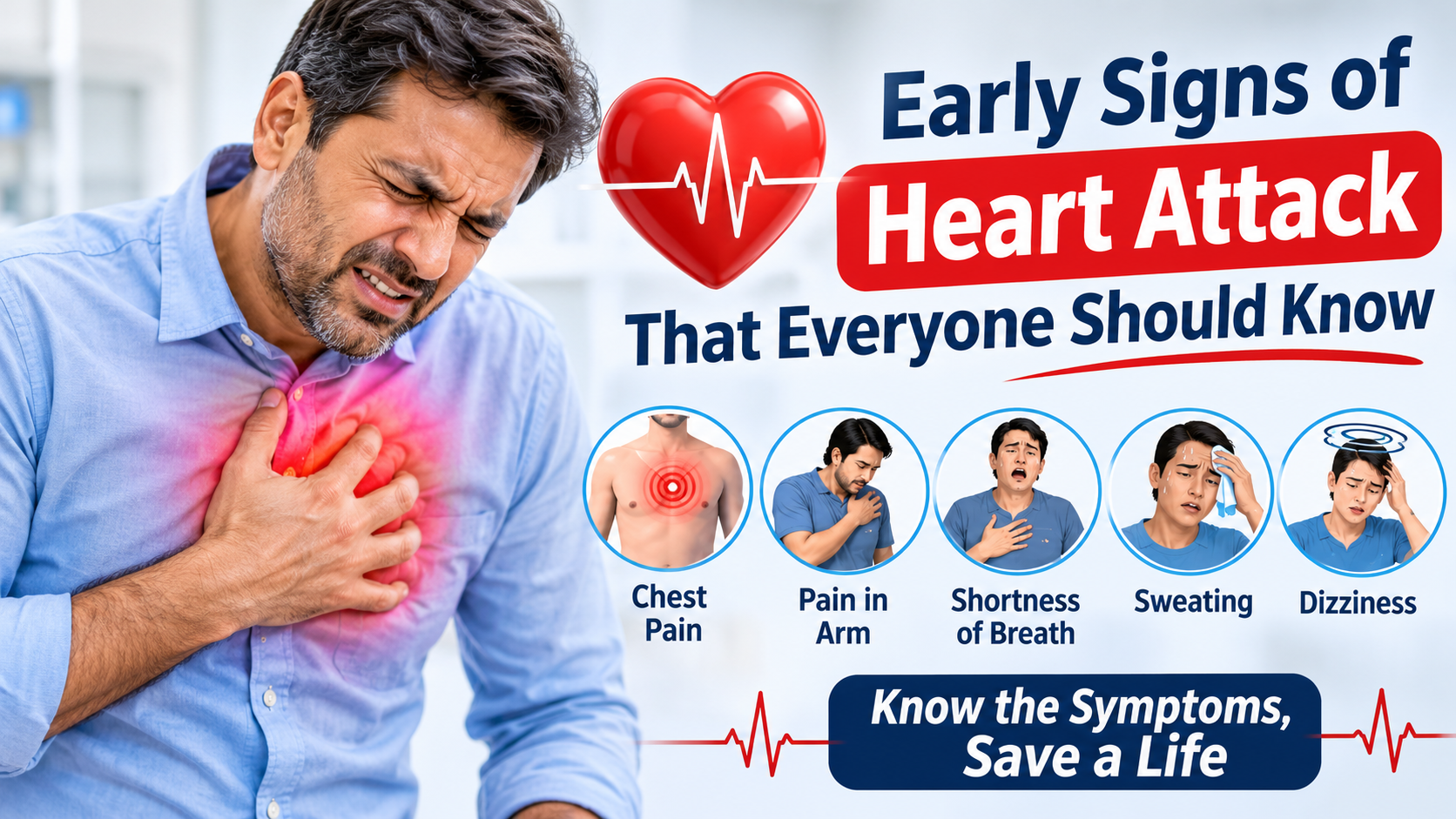
Early Signs of Heart Attack That Everyone Should Know
A heart attack is a serious medical emergency that occurs when blood flow to a part of the heart is blocked. Without timely treatment, the heart muscle may become damaged. Recognizing the early signs of a heart attack is important because immediate medical attention can help save lives and reduce complications.
Heart attack symptoms may vary from person to person. While chest pain is the most common warning sign, some people may experience breathlessness, sweating, nausea, dizziness, or unusual fatigue.
What Is a Heart Attack?
A heart attack, medically known as myocardial infarction, occurs when blood supply to the heart muscle is reduced or blocked, usually due to a blood clot in a coronary artery. This prevents the heart from receiving enough oxygen, causing damage to the affected muscle.
Common Warning Signs of a Heart Attack
1. Chest Pain or Pressure
Chest discomfort is one of the most common symptoms. It may feel like tightness, squeezing, heaviness, or pressure in the centre or left side of the chest.
2. Pain in the Arm, Neck, or Jaw
Heart attack pain can spread to one or both arms, shoulders, neck, jaw, or upper back. This discomfort should never be ignored, especially when accompanied by chest pain.
3. Shortness of Breath
Sudden difficulty in breathing may occur with or without chest discomfort. Some people experience breathlessness even while resting.
4. Excessive Sweating
Unexpected cold sweating without physical activity can sometimes be a warning sign, particularly when accompanied by dizziness or chest discomfort.
5. Nausea and Dizziness
Some patients experience nausea, vomiting, lightheadedness, or unusual weakness during a heart attack.
6. Unusual Fatigue
Sudden or unexplained tiredness may sometimes indicate a heart problem. Women and older adults may experience less typical symptoms.
Major Risk Factors for a Heart Attack
Several factors can increase the risk of heart disease and heart attacks, including:
- High blood pressure and high cholesterol.
- Diabetes and obesity.
- Smoking and tobacco consumption.
- Lack of physical activity.
- Unhealthy eating habits.
- Family history of heart disease.
- Increasing age.
What Should You Do During a Heart Attack?
If someone experiences symptoms of a possible heart attack, seek emergency medical help immediately. Call emergency services, keep the person comfortable, and avoid unnecessary physical activity. Do not allow the patient to drive themselves to the hospital.
Doctors may recommend an ECG, cardiac blood tests, and other investigations to confirm the diagnosis and determine the appropriate treatment.
How to Reduce the Risk of a Heart Attack
Maintaining a healthy lifestyle can help reduce cardiovascular risk. Eat a balanced diet, exercise regularly, avoid smoking, maintain a healthy weight, and monitor blood pressure, cholesterol, and blood sugar levels. Regular medical checkups are also important, especially for people with existing health conditions.
Conclusion
Recognizing the early signs of a heart attack can make a life-saving difference. Chest pain, breathing difficulties, unusual sweating, nausea, and sudden weakness should never be ignored. Timely medical attention, regular health checkups, and healthy lifestyle habits play an important role in protecting heart health.
Medical Disclaimer: This article is for general health awareness only and does not replace professional medical advice, diagnosis, or emergency treatment.