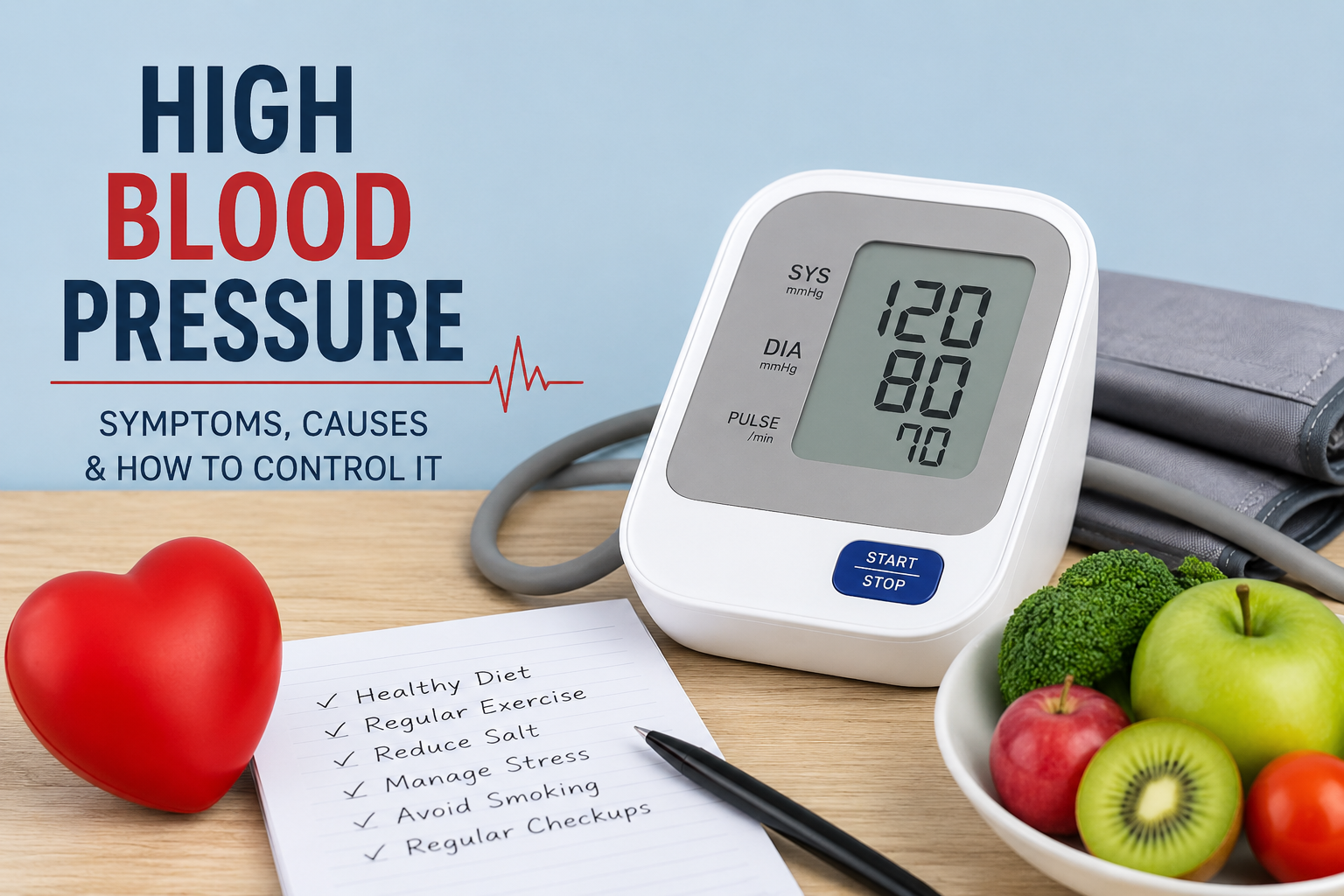
High blood pressure, also called hypertension, is a common condition in which the force of blood against the walls of the arteries remains higher than normal. Many people with high blood pressure do not notice any symptoms, which is why it is often called a “silent” condition.
If high blood pressure remains uncontrolled for a long time, it can increase the risk of serious health problems. Regular blood pressure checks and healthy lifestyle habits can help manage the condition.
What Are the Symptoms of High Blood Pressure?
High blood pressure often does not cause noticeable symptoms. A person may feel completely normal even when their blood pressure is high.
When blood pressure becomes very high, some people may experience:
- Severe headache
- Dizziness
- Blurred vision
- Shortness of breath
- Chest discomfort
- Nosebleeds
- Feeling unusually tired
These symptoms do not always mean that you have high blood pressure. The most reliable way to know your blood pressure level is to have it measured regularly.
Common Causes and Risk Factors
Several factors can increase the risk of developing high blood pressure. These include:
- Eating too much salt
- Being overweight or obese
- Lack of regular physical activity
- Smoking or tobacco use
- Excessive alcohol consumption
- Long-term stress
- Family history of high blood pressure
- Increasing age
- Certain medical conditions and medicines
In some cases, there may not be one specific cause. Your doctor can help identify possible risk factors and recommend appropriate care.
How Can You Control High Blood Pressure?
The good news is that high blood pressure can often be managed with healthy lifestyle changes and, when needed, medicines prescribed by a doctor.
1. Eat a Healthy Diet
Choose more fruits, vegetables, whole grains, and other nutritious foods. Try to reduce your intake of salty, processed, and highly packaged foods.
2. Stay Physically Active
Regular physical activity can help maintain a healthy weight and support heart health. Choose activities such as walking, cycling, swimming, or other exercises that are suitable for you.
3. Maintain a Healthy Weight
If you are overweight, losing even some weight can support better blood pressure control. A doctor or dietitian can guide you toward a suitable plan.
4. Avoid Tobacco
Smoking and tobacco use can damage blood vessels and increase cardiovascular risk. Quitting tobacco is an important step toward better overall health.
5. Take Medicines as Prescribed
Some people need medicines to control high blood pressure. Take your medicines exactly as prescribed and do not stop them without consulting your doctor.
6. Check Your Blood Pressure Regularly
Regular monitoring helps you and your doctor understand whether your blood pressure is under control. Keep a record of your readings if your doctor recommends it.
When Should You See a Doctor?
If you have repeatedly high blood pressure readings, consult a doctor for proper evaluation. You should also seek urgent medical attention if you have very high blood pressure along with symptoms such as severe chest pain, difficulty breathing, weakness, confusion, or sudden changes in vision.