Robotic Knee Replacement vs Traditional Knee Replacement: What Is the Difference?
Knee replacement surgery is a common treatment for people suffering from severe knee pain, arthritis, joint damage, or difficulty walking. With advances in medical technology, patients today may have the option of robotic knee replacement in addition to traditional knee replacement surgery. But what is the difference between the two, and which option may be better for you?
What Is Traditional Knee Replacement?
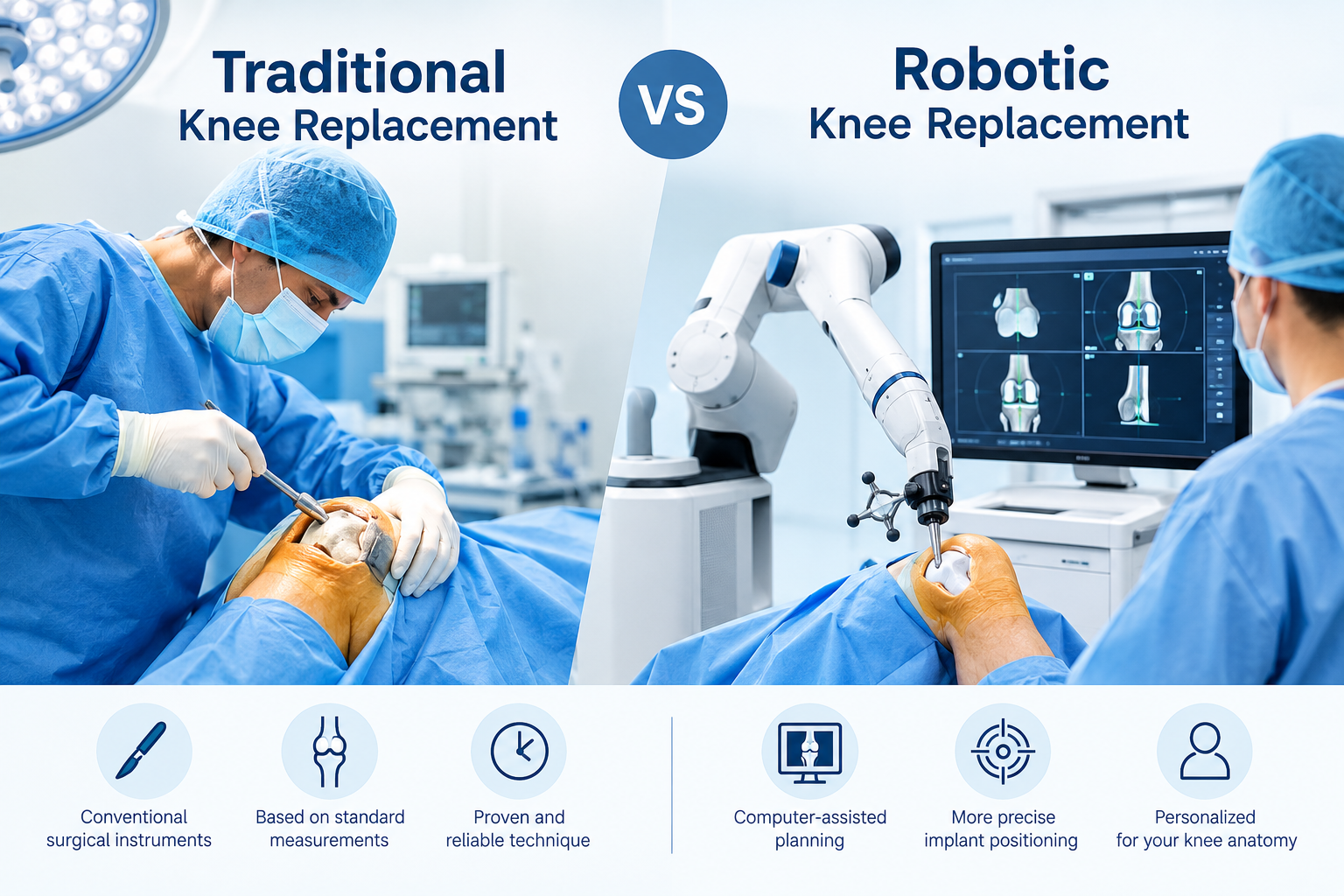
Traditional knee replacement surgery is a well-established procedure in which the damaged parts of the knee joint are removed and replaced with an artificial joint implant. The surgeon uses medical imaging, measurements, and surgical instruments to determine the appropriate positioning of the implant.
Traditional knee replacement has been performed successfully for many years and can help reduce chronic knee pain, improve mobility, and make everyday activities easier.
What Is Robotic Knee Replacement?
Robotic knee replacement is an advanced form of knee replacement surgery that uses a computer-assisted robotic system to help the surgeon plan and perform the procedure. The technology provides detailed information about the patient's knee anatomy and helps the surgeon make precise bone cuts and position the implant accurately.
It is important to understand that the robot does not perform the surgery independently. The surgeon remains in control throughout the procedure, while the robotic system acts as a technology-assisted tool.
Robotic vs Traditional Knee Replacement
The main difference is the level of technology used to assist the surgeon during the procedure. In traditional knee replacement, the surgeon relies primarily on conventional surgical instruments and planning methods. In robotic knee replacement, advanced computer technology can provide additional information and guidance during surgery.
Potential advantages of robotic-assisted surgery may include more precise surgical planning, improved implant positioning, and greater personalization based on the patient's knee anatomy. However, the suitability of robotic surgery depends on the individual patient's condition, medical history, and the surgeon's assessment.
Which Knee Replacement Is Better?
There is no single answer that is right for every patient. Both robotic knee replacement and traditional knee replacement can be effective options when performed by an experienced orthopedic surgeon.
Patients with severe knee arthritis, significant joint damage, persistent pain, or difficulty performing daily activities may be evaluated for knee replacement surgery. Your orthopedic specialist can examine your knee, review imaging reports, and discuss your treatment options before recommending the most appropriate procedure.
Recovery After Knee Replacement
Recovery after knee replacement depends on several factors, including the patient's overall health, age, physical condition, and rehabilitation plan. Physiotherapy after knee replacement plays an important role in improving strength, flexibility, balance, and mobility.
Following your surgeon's instructions, attending physiotherapy sessions, maintaining a healthy weight, and gradually returning to normal activities can support the recovery process.
Consult an Orthopedic Specialist
If knee pain is affecting your walking, climbing stairs, sleeping, or daily activities, it may be time to consult an orthopedic specialist. A proper evaluation can help determine whether medication, physiotherapy, injections, or knee replacement surgery may be appropriate.
At Delhi Hospital, patients can discuss their knee problems and available treatment options with an experienced orthopedic team. The right approach depends on your individual condition, and your doctor can help you understand whether robotic knee replacement or traditional knee replacement is suitable for you.