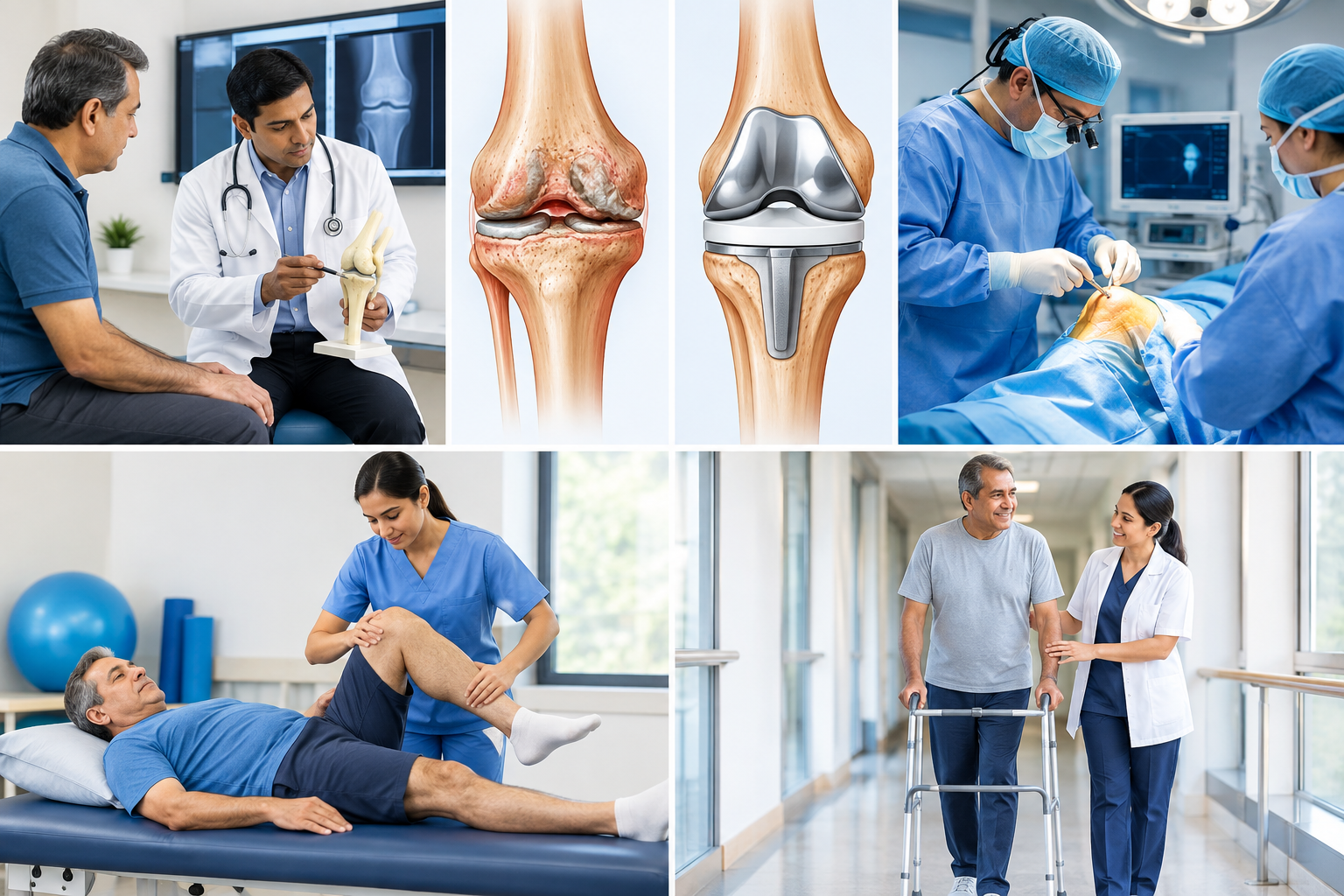
Joint replacement surgery is a common treatment for people who have severe joint pain, stiffness, or difficulty moving because of conditions such as arthritis or joint damage. Knee and hip replacement are among the most common types of joint replacement surgery. Knowing what happens before and after the procedure can help patients feel more prepared and confident.
Before Joint Replacement Surgery
Before surgery, your doctor will carefully evaluate your overall health and the condition of the affected joint. This may include a physical examination, X-rays, blood tests, and other diagnostic tests if required.
Your orthopedic surgeon will discuss your symptoms, medical history, medications, and the expected benefits of surgery. You may also be advised to make certain lifestyle changes before the procedure.
Patients are usually given instructions about eating, drinking, medications, and preparing for the day of surgery. It is important to follow these instructions carefully. Your doctor may also recommend pre-surgery physiotherapy exercises to help improve muscle strength and mobility.
Depending on your condition, the medical team will also explain the type of anesthesia, expected hospital stay, possible risks, and recovery process.
During Joint Replacement Surgery
During joint replacement surgery, the damaged parts of the joint are removed and replaced with specially designed artificial components. The exact procedure depends on whether you are undergoing knee replacement, hip replacement, or another type of joint replacement.
The surgical team continuously monitors your vital signs throughout the procedure. The goal is to reduce pain, improve joint movement, and help you return to daily activities.
Immediately After Surgery
After surgery, you will be moved to a recovery area where the medical team monitors your condition. Pain management is an important part of early recovery. Your doctor may prescribe medicines to control pain and reduce the risk of complications.
In many cases, physiotherapy after joint replacement begins soon after surgery. A physiotherapist may guide you through simple movements and exercises to improve circulation, flexibility, and muscle strength.
You may initially need support while standing or walking. Depending on your recovery, a walker, crutches, or other assistance may be recommended.
Recovery After Joint Replacement Surgery
Recovery varies from person to person. Following your doctor's instructions and completing your physiotherapy exercises regularly can support a smoother recovery.
Patients should gradually return to normal activities rather than putting excessive stress on the new joint. Regular follow-up appointments allow your doctor to monitor healing and joint function.
Maintaining a healthy weight, staying active as recommended, and following rehabilitation advice can also help protect the artificial joint.
When Should You Contact Your Doctor?
After surgery, contact your medical team if you experience unusual or worsening pain, significant swelling, fever, wound problems, or difficulty moving the joint. Early medical attention can help identify and manage potential complications.
Joint replacement surgery can significantly improve mobility and quality of life for suitable patients. Understanding the process before and after surgery can make the treatment journey easier and help patients prepare for a safe and successful recovery.