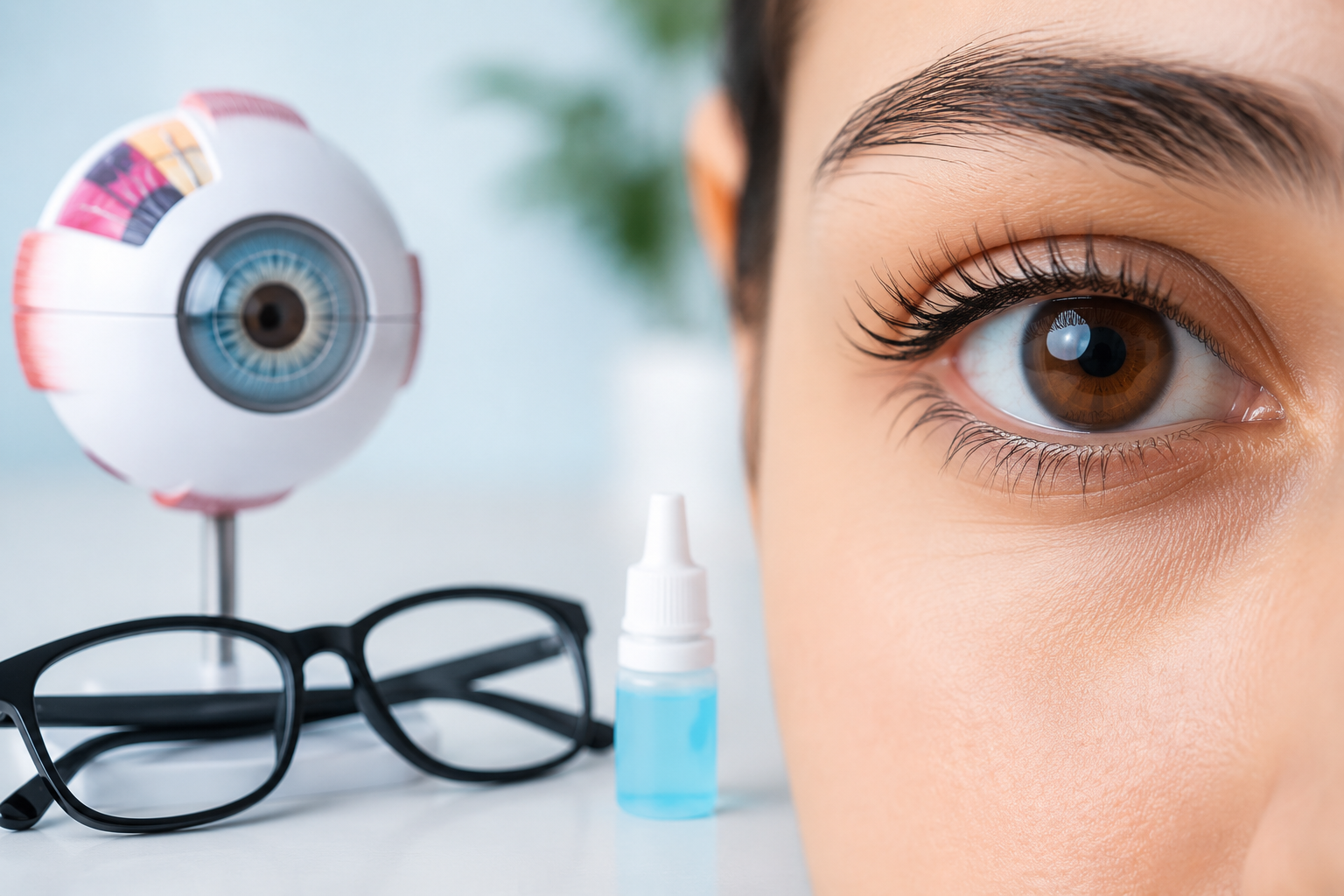
Our eyes are one of the most important parts of our body, helping us see and understand the world around us. However, eye problems can affect people of all ages. Some conditions are minor and temporary, while others may require proper medical treatment. Knowing the common symptoms can help you seek timely care and protect your vision.
1. Dry Eyes
Dry eyes occur when the eyes do not produce enough tears or tears evaporate too quickly. Common symptoms include burning, irritation, redness, watering, and a feeling of something being stuck in the eye.
Causes: Excessive screen time, air conditioning, lack of sleep, ageing, and certain medications can contribute to dry eyes.
Treatment: Doctors may recommend lubricating eye drops, taking regular breaks from screens, staying hydrated, and treating the underlying cause.
2. Cataracts
A cataract develops when the natural lens of the eye becomes cloudy. It is more common with ageing and can gradually affect vision.
Symptoms: Blurred vision, difficulty seeing at night, sensitivity to light, faded colours, and frequent changes in glasses prescription.
Treatment: In the early stages, updated glasses may help improve vision. When cataracts significantly affect daily activities, cataract surgery may be recommended by an eye specialist.
3. Conjunctivitis
Commonly known as pink eye, conjunctivitis causes inflammation of the thin covering of the eye.
Symptoms: Redness, itching, watering, discharge, and irritation.
Causes: It can be caused by viruses, bacteria, allergies, or other irritants.
Treatment: Treatment depends on the cause. Viral conjunctivitis may improve on its own, while bacterial cases may require medicines prescribed by a doctor. Avoid touching or rubbing your eyes, and maintain good hand hygiene.
4. Refractive Errors
Refractive errors are among the most common causes of vision problems. They include short-sightedness (myopia), long-sightedness (hyperopia), and astigmatism.
Symptoms: Blurred vision, headaches, eye strain, and difficulty seeing objects clearly.
Treatment: Refractive errors can usually be corrected with prescription glasses or contact lenses. In suitable adults, certain procedures may also be considered after an eye examination.
5. Glaucoma
Glaucoma is a group of eye conditions that can damage the optic nerve and may lead to permanent vision loss if untreated. It can develop gradually without noticeable symptoms in its early stages.
Treatment: Depending on the type and severity, treatment may include prescription eye drops, laser treatment, or surgery. Regular eye examinations are important for early detection.
When Should You Visit an Eye Specialist?
You should consider an eye examination if you experience persistent blurred vision, eye pain, sudden changes in vision, frequent headaches, flashes of light, or unexplained redness. Sudden loss of vision requires urgent medical attention.
Regular eye check-ups are also important, especially for older adults and people with conditions such as diabetes or a family history of certain eye diseases.